Each venerable katana remains a remarkable work of art, but say you want to convey your personal design? Customizing your cutting tool is a deep journey, allowing you to construct a truly matchless piece. From the hilt wrapping and sheath to the handpiece design and marking, each feature offers a chance for personalization. This examination delves into the field of katana adjustments, providing facts for both beginners and proficient enthusiasts desiring to leave their footprint on the classical art of the samurai.
Newcomer's Original Mastery
For individuals excited to embark on the beneficial journey of samurai sword fighting , 1060 steel katanas extend an excellent entry point. This particular grade of elemental steel finds a suitable blend between price and efficiency . While below hard as supreme steels, 1060 allows for a workable level of blade refinement , making it tailored to trainees to cultivate the preliminaries of blade care and enjoy the charm of genuine Japanese weaponry. It’s a superb choice for establishing experience without the fiscal burden of more elite steels.
T Gear Steel Weapons : Combining Potency and Reasonableness
Satisfying specialists seeking an authentic cutting instrument experience without crossing the financial plan, T10 composition katanas represent a advantageous option. These implements offer a clear improvement in lastingness compared to basic alternatives, exhibiting respectable edge retention and ample flexibility for simple chopping techniques. While not rivaling the premium characteristics of higher-grade steels like T100 or folded steel , T10 provides a effective blend of capacity and reasonableness , making them a trendy choice for students and those on a restrained income .
Going past the Keel : Adapting Your Cutting Weapon's Fittings and Grasp
Though the refined edge is undeniably the essential point of a katana, truly boosting its charm lies in the meticulous customization of its features and shaft . This art allows devotees to exhibit their individual style . Review the broad possibilities: menuki - decorative appliqués that bring visual appeal ; the hamon sheaths – often masterfully etched ; the tsuka nucleus itself, wrapped in classic ito rope ; and the fusa end piece , which can be constructed from various components like gold or tusk .
- Select subjects that connect with you.
- Evaluate with diverse composites .
- Focus on robustness for a long-term result .
The Love of the Katana: Antiquity, Formation, and Composition
The oriental cutlery shows a distinctive allure, steeped in eras of Japanese history and legacy . More than merely a contraption of warfare , it's a icon of the champion ethos – a fusion of skill and regulation . Its maturation spanned score generations, with early steel evolving into the sophisticated curvature and deadly edge we know today. The workmanship involved is truly spectacular, requiring years of study to excel at . The process involves a sophisticated folding of tamahagane , creating layers that improve the weapon’s flexibility and hacking ability. Assorted schools of forging emerged , each with their specific secrets and procedures for achieving the exceptional steadiness and keenness - a truly demanding pursuit.
- Primitive Katana types
- The part of the historical weapon in soldier culture
- Established smithing methods
Deciding the Best Steel for Your Japanese Sword Project: 1060 vs. T10
Deciding on the suitable steel is vitally important for any blade project, and the selection between 1060 and T10 can be challenging. 1060 is a widely used American alloy, offering a decent balance of strength and resilience, making it relatively easy to heat treat. However, T10, a Asian steel, commonly boasts amplified wear permanence and can probably achieve a superior decisive hardness, although it can be noticeably challenging to process and requires accurate heat treatment. Consider your background and expected benefits: for a rookie, 1060 may be a simpler starting point, while the master smith might choose the augmented features of T10.
- Convenience of Working
- Longevity
- Decisive Rigidity
Accessing Excellence: Progressive Katana Alteration Approaches
Developing mastery in sword customization extends far beyond basic honing. Serious enthusiasts are now studying advanced techniques to truly liberate a blade's hidden potential. This involves intricate work with the blade border, utilizing specialized compounds for differential hardening and carefully electing the shape of the crossguard to optimize balance and capability. Beyond purely functional alterations, artisans are increasingly focused on generating unparalleled aesthetic charm, through complex embossing and layered textures that truly transform a katana into a work of art.
Transforming Basic Steel into Art: Building a 1060 Sword
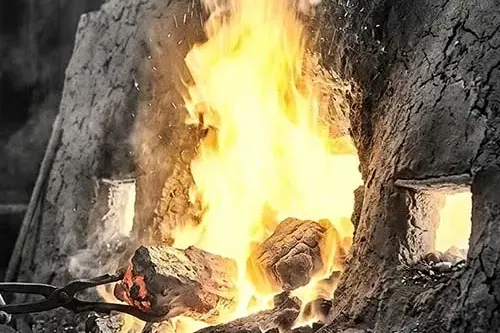
The journey initiates with common 1060 fabrication , a durable material far apart the beautiful katana it will mature into . Master bladesmiths carry out a intricate process of stacking and shaping the rough steel, repeatedly glowing it and striking it to separate impurities and form a balanced grain structure. This tedious process, often continuing for spans , builds the essential hardness and flexibility characteristic of a authentic Japanese cutlery . Further heat procedures , including methodical sword custom hardening and tempering , are essential to achieve the targeted balance of sharpness, life and charm .- Uniting: Removes impurities and develops grain structure.
- Forming: Fabricates the steel into the initial blade form.
- Tempering: Decides the final hardness and flexibility.
The Lasting Drawing of the Katana: An In-Depth Look at Metal and Personalization
This venerable katana lasts a compelling symbol of Japanese artistry , its charm far outshining mere artillery . Forged from select steel and usually featuring intricate designs , the method of creation itself is a respected art. Beyond the core craftsmanship, the ability to tailor a katana - from the quench mark to the haft wrapping and fitting - affords for a sincerely individual demonstration for both curators and participants alike. This confluence of classical steelwork and boundless personalization creates the katana's continued widespread acceptance across the universe.
