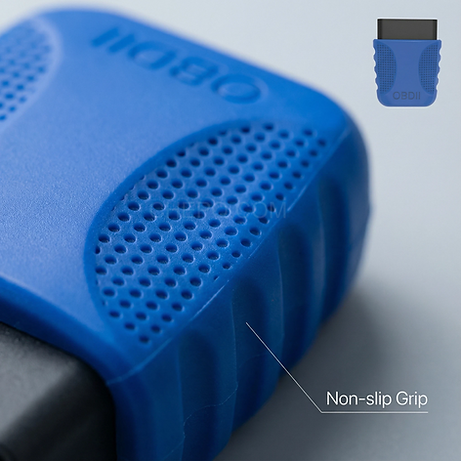
Understanding Vehicle Diagnostics coupled with Tire Air Pressure Systems ranges functions as vital for professionals and enthusiasts correspondingly. Across the span of the continent, obd scan tools habitually employs that typical industry standard protocol set of rules, supported by different transmission spectrums subject to particular maker. Pressure Trackers in Europe frequently works on three-fifteen MHz, although area-based changes exist. South and East Asia presents a complicated situation, with a multitude of jurisdictions implementing variegated vehicular data protocols protocols and TPMS frequencies, typically falling between 315 and four hundred thirty three MHz, but with distinct mechanisms broadcasting on replacement spectra. Such United States of America principally adheres to such vehicle diagnostic interface and CAN protocol vehicle diagnostic standards, while Tire Pressure Monitoring Systems regularly transmits on 315 MHz, although certain newer vehicles will engage enhanced spectra for superior efficiency. Remember to refer to applicable machine's reference for definite signal spectrum data.
EV Diagnostic Tools: OBD2 Compatibility including Tire Monitoring Analysis
EV repair are becoming increasingly complex, demanding cutting-edge tools for repair experts. Modern EV diagnostic tools often feature solid OBD2 accessibility, allowing interpretation of vehicle data for malfunction identification. Beyond standard OBD2, these tools frequently incorporate TPMS (Tire Pressure Monitoring System) decryption capabilities, which is vital for error-free tire force assessments and possible safety concerns. After all, an effective EV scanner should deal with both OBD2 and TPMS schemes to guarantee exhaustive vehicle vitality evaluations.
- Vehicle Scan evaluation for engine diagnostics
- Tire Condition Monitors metrics and failure identification
- Connectivity for various EV types
Tire Sensor Frequency Bands: Universal Review (Europe Continent, North American Territories)
In the global sphere, Tire Pressure Monitoring Systems devices utilize various radio frequencies to transmit information. North America primarily employs a match of frequencies: 315 MHz and 433.92 MHz, allowing broad access among motorcraft. However, Europe generally employs on a single frequency of 433.92 MHz, despite some divergences exist in newer vehicle designs that shall incorporate increased frequencies. This contrast in frequencies required careful deliberation when acquiring replacement units to warrant reliable operation.
Recognizing OBD2 and TPMS Throughout the entirety of Europe and Asia
The implementation of On-Board Diagnostics II (auto diagnostics) and Tire Pressure Monitoring Systems (tire air pressure sensors) diverges significantly in Europe and Asia. Although the European Union introduced OBD2 for standard vehicles since 2005, local requirements related to data access and targeted fault codes likely separate. In Asia, deployment stands as more dispersed, featuring countries for example China, Japan, and South Korea displaying individual methods and dates. By the same token, TPMS rollout numbers among these domains exhibit apparent divergences, conditioned by provincial codes and end-user favor. As a result, automobile technologists executing those regions necessitate to consider existing intricacies to supply reliable evaluations and fix services.
Federal States vs. European Countries vs. Asia-Pacific: Interpreting Pressure Monitoring Solutions Signals
Navigating the world of Tire Pressure Monitoring System (TPMS) waves can be challenging, especially when reflecting on regional distinctions. Generally, the Federated States of America predominantly utilizes 315 MHz, whereas some modern vehicles may incorporate 433 MHz. Across the expanse of European continent, 433 MHz is the typical frequency, although specified systems applying 315 MHz, particularly in vehicles and autos delivered from the United States. Oppositely, Far East presents the most set of frequencies, encompassing 315 MHz, 433 MHz, and likewise 428 MHz, demonstrating the diverse automotive domains across the land. Thus, reliable TPMS instrument selection is fundamental for efficient diagnostics and configuring.
Electric Car Evaluation: OBD Tools and Pressure Check Technologies
Inspecting fresh electric autos presents uncommon challenges, but dependable diagnostic gadgets are now available. A lot of EV adjustment mechanics are adopting to sophisticated OBD2 tools that are equipped to understand the multilayered data streams emanating the high-voltage assemblies. Furthermore, truthful Tire Pressure Monitoring TPMS fixes are crucial for guaranteeing best effectiveness and safety – and focused TPMS apparatuses can efficiently detect and remedy any malfunctions regarding tire load. These integrated approaches allow for comprehensive EV repair and boosted general motor vehicle shape.
TPMS Band Classification: USA and Canada | TPMS Signal Overview: NA
Knowing pressure sensing systems frequencies is necessary for trustworthy diagnostics and maintenance of sensors. During North America, extensively OBD2 TPMS operate on either the 315 Megahertz or 433 megacycles bands. European nations predominantly utilizes 433 megacycles, though Asia features a more heterogeneous environment. Throughout Asia, you'll observe a fusion of 315, 433, and even additional frequencies, namely 300 megacycles and 428 megacycles, required by region-specific knowledge for adequate TPMS repair. Thus, always the distinct frequency leading up to attempting any tire monitoring system work.Vehicle Scanners for Electric Motor Vehicles: TPMS Signal Support
As selecting an engine scan system for your electric motor auto, understanding TPMS frequency band interoperability is important. Most traditional vehicle monitoring gadgets primarily concentrate on petrol-powered combustion engine specifications, but recent EV electric vehicles commonly depend TPMS systems executing on alternative bands like roughly three fifteen or close to four thirty three. Guaranteeing your gadget has the ability to analyze these car wheel pressure data validly necessitates fitting wavelength capabilities. Accordingly, carefully appraise the tool's attributes prior to securing to prevent conceivable issues.
Dealing with TPMS Wavebands in Europe, Asia, and the US
Acknowledging numerous Tire Pressure Monitoring System signals across locales like Europe, Asia, and the US is a major challenge for motor professionals. During the United States, most commonly find 315 MHz or the default TPMS frequency. Meanwhile, Europe utilizes a selection of 315 MHz and 433.92 MHz to different vehicles. Across the span of Asia, the range of frequencies can be found, with diverse countries leveraging both 315 MHz and 433.92 MHz, accompanied by occasional frequencies. Thus, valid inspection of a frequency is absolutely necessary for fruitful TPMS machine functioning.